

How Marketing Teams Won This Year and How to Prepare for 2026 2025 was a year of major change in...
What Is a B2B Buying Group? How to Drive Pipeline with Buying Group Coverage
A B2B buying group is the set of stakeholders involved in evaluating and purchasing a solution. Most buying groups include 5 to 10 people across roles like IT, finance, procurement, and operations.
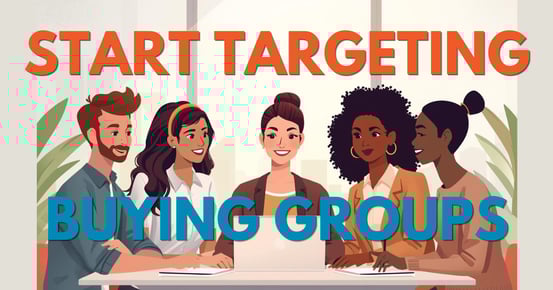
Stop targeting personas. You are marketing to one person. The deal is being decided by eight. That gap between the contact you know and the committee you don't is where pipeline stalls, win rates disappoint, and deals go quiet without explanation. Persona-based targeting was not built for this buying environment. The sooner you stop optimizing for individuals and start building coverage across the full buying group, the sooner your numbers will start moving.
Most B2B deals are decided before sales ever get a meeting. If you are influencing one contact, you are not influencing the final decision. Deals stall when key roles in the buying group are not engaged.
The Buying Group Is The Buyer
A buying group is the real buyer in B2B marketing. One champion rarely controls the purchasing outcome. They influence it. The decision is made collectively.
Teams that align sales and marketing to engage the right members of the buying group achieve 2 to 3 times higher win rates.1 Buying group coverage means engaging multiple stakeholders within the same account.
Buyers also complete most of their journey before engaging with sales, and the preferred vendor at that stage wins the majority of deals.2
If you are not engaging the full group early, you are competing from behind.
Why Personas Fail
Why is buying group coverage important?
Buying group coverage ensures you engage all stakeholders involved in a decision. Without it, deals stall because key decision-makers are not influenced or informed. Personas are useful for messaging. They fail as a targeting strategy.
They assume one decision-maker
Real deals involve multiple roles with different priorities. A CISO cares about risk. Finance cares about cost. Engineering cares about implementation. No single persona can represent all of them.
They optimize for contacts, not accounts
One engaged lead does not indicate buying intent. Multiple stakeholders engaging in the same account at the same time do.
They ignore blockers
Legal, procurement, and finance often determine whether deals move forward. They are rarely included in persona strategies. They can stop deals completely.
A Simple Buying Group Framework
Every deal typically includes five core roles:
- Economic buyer
- Technical evaluator
- Champion
- Finance
- Procurement
Your job is not to generate a lead. It is to build coverage across these roles within target accounts.
How Buying Group Targeting Works
1. Identify the Group
Start with your ICP. Then map the roles involved in your category.
Example for a security platform:
- CISO (economic buyer)
- Director of Security Engineering (technical evaluator)
- Cloud Architect (implementer)
- Finance (approver)
- Procurement (process owner)
Then assess coverage:
- Who have you identified?
- Who is missing?
2. Align with Sales
Marketing and Sales often work on different versions of the same account.
Fix this by agreeing on:
- Required roles for qualification
- Minimum buying group coverage
- Signals that indicate a real opportunity
When both teams work with the same definition, pipeline quality improves.
3. Detect Buying Group Activation
Individual intent signals are weak. Group-level signals are strong.
Look for:
- Multiple stakeholders engaging
- Activity across functions
- Compressed engagement over time
This is the difference between passive interest and active buying.
4. Build Multi-threaded Engagement
Most programs reach one or two contacts. That is not enough.
You need:
- Role-specific messaging
- Coordinated outreach across functions
- Consistent account-level narrative
Buyers spend limited time with vendors, and that time is split across multiple providers.
If parts of the buying group are not hearing from you, they are hearing from someone else.
A Practical Shift in Measurement
You do not need a new strategy. You need to add metrics for buying groups.
How do you measure buying group coverage?
- The percentage of target accounts with three or more engaged roles
- Buying group coverage by account
- Multi-contact engagement within a defined time window
- Pipeline progression tied to group activity
The goal is to achieve full coverage of the buying group in the right accounts.
How DemandSkill Supports Buying Group Execution
Buying group targeting fails without accurate data.
If contacts are missing, outdated, or misaligned, your coverage is incomplete. That leads to false signals, blind spots in key accounts, and deals that stall before sales ever know why.
DemandSkill helps teams:
- Identify missing roles within target accounts
- Access verified, current contact data
- Layer in account-level intent signals
- Execute multi-touch programs designed for full buying group coverage
Most programs fail at the data layer before they ever fail at the strategy layer. Clean data is not a nice-to-have. It is the foundation that makes everything else work.
The teams that win are not the ones with the best personas. They have the best buying group coverage.
Clean data. Clear intent. Predictable pipeline. Identify and engage your full buying group to drive pipeline and win more deals.
References
- Demandbase – Buying Groups: The Key to Higher Win Rates https://www.demandbase.com/resources/labs/b2b-buying-groups-drive-revenue/
-
6sense – The B2B Buyer Experience Report 2025 https://6sense.com/science-of-b2b/buyer-experience-report-2025/
Blog comments